Work Stress Management: A Practical Guide for HR Teams and Managers
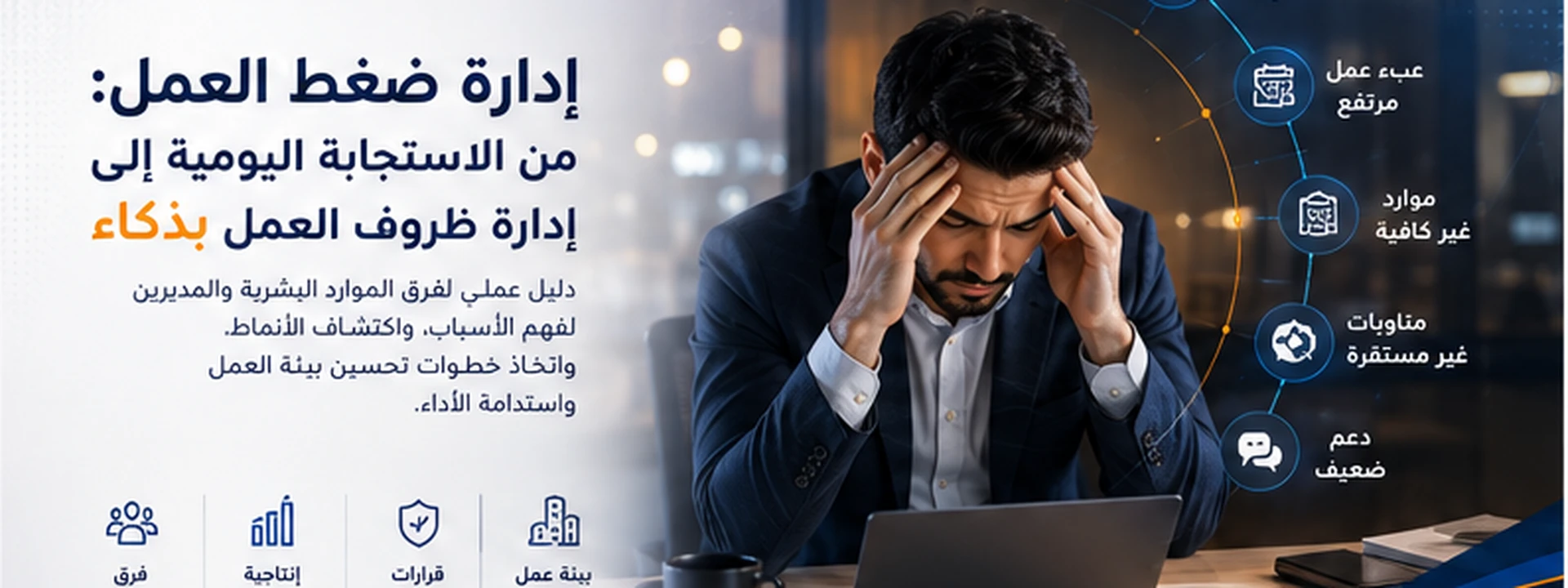
Workplace stress exists to some degree in almost every organization. The real concern begins when pressure becomes persistent and is linked to excessive workload, repeated time pressure, unstable schedules, insufficient staffing, weak managerial support, or unclear roles.
For HR teams and managers, the objective is not to eliminate every form of pressure. The goal is to identify workplace conditions that can be improved and to manage work in a more sustainable way.
The World Health Organization identifies several psychosocial risks that may affect mental health at work. These include excessive workloads or work pace, understaffing, long or inflexible working hours, shift work, limited control over work, poor workplace relationships, insufficient support, and unclear roles.
In practice, common pressure factors may include:
• Persistently high workloads.
• Repeated tight deadlines.
• Insufficient staffing for the volume of work.
• Long working hours or unstable schedules and shifts.
• Unclear responsibilities and priorities.
• Weak communication or managerial support.
• Difficulty maintaining healthy boundaries between work and personal life.
A busy day or an unusually demanding project does not necessarily indicate a long-term workplace problem.
Management should instead review patterns that continue over time, particularly when several operational indicators begin to change together.
• Repeated increases in overtime.
• Consistently late departures.
• Frequent work on rest days.
• Frequent shift changes.
• Difficulty maintaining stable schedules.
• Persistent workload concentration within one team or shift.
Absence and Leave
• Noticeable changes in absence or lateness patterns.
• Leave balances accumulating without being used.
• An increase in short absences following intensive work periods.
Performance and Engagement
• Sustained changes in work quality or completion speed.
• Reduced participation or initiative.
• More frequent complaints related to workload or scheduling.
These signals are not a medical or psychological diagnosis. Their purpose is to help management identify where working conditions may require closer review.
How Can Organizations Manage Workplace Stress More Effectively?
1. Review Workload and Resources
Start by comparing the volume of work with the number of employees and the time available.
If one team is consistently operating beyond its realistic capacity, the issue may be related to workload distribution, staffing, or available resources rather than the ability of individual employees to “handle pressure.”
2. Set Realistic Goals and Deadlines
Persistent time pressure and repeated unrealistic deadlines can contribute to chronic workplace stress.
Targets and deadlines should therefore reflect the actual size of the team, available resources, operational priorities, and the time required to complete work to the expected standard.
3. Manage Working Hours and Shifts
Clear and reasonably stable schedules help both employees and managers plan more effectively.
Reviewing overtime, shift changes, and recurring schedule disruptions can also help organizations identify operational pressure before it becomes a long-term pattern.
4. Strengthen the Manager’s Role
WHO guidance supports manager training to improve understanding of workplace stress, communication skills, and appropriate responses when employees show signs of distress.
Managers should be able to discuss workload, priorities, available resources, and barriers to performance without automatically framing the issue as an individual weakness.
5. Involve Employees in Decisions That Affect Their Work
Employees often understand operational bottlenecks better than anyone else.
Involving them in decisions related to schedules, workflows, priorities, and recurring operational problems can lead to more realistic and sustainable solutions.
6. Use Flexible Work Arrangements Clearly
The International Labour Organization notes that certain flexible working arrangements can support work-life balance when they are properly designed and managed.
Flexibility should not become an expectation of permanent availability or an uncontrolled extension of working hours.
7. Measure the Impact of Changes
After redistributing work, adjusting schedules, changing staffing levels, or introducing new processes, review the data again.
Ask:
Has overtime decreased?
Have shifts become more stable?
Is leave being used more consistently?
Have recurring operational problems decreased?
Has employee feedback improved?
Analyze Trends, Not Isolated Incidents
One week of increased overtime does not prove that a team is experiencing a chronic workplace problem.
However, if overtime continues to rise for several weeks or months while absence increases, shift changes become more frequent, or leave remains unused, the pattern deserves closer review.
The key is to combine several indicators and understand the operational context before reaching a conclusion.
Dawmt does not diagnose workplace stress or any psychological condition.
Its role is to organize workforce and HR data so that HR teams and management can review operational patterns more clearly and make better-informed decisions.
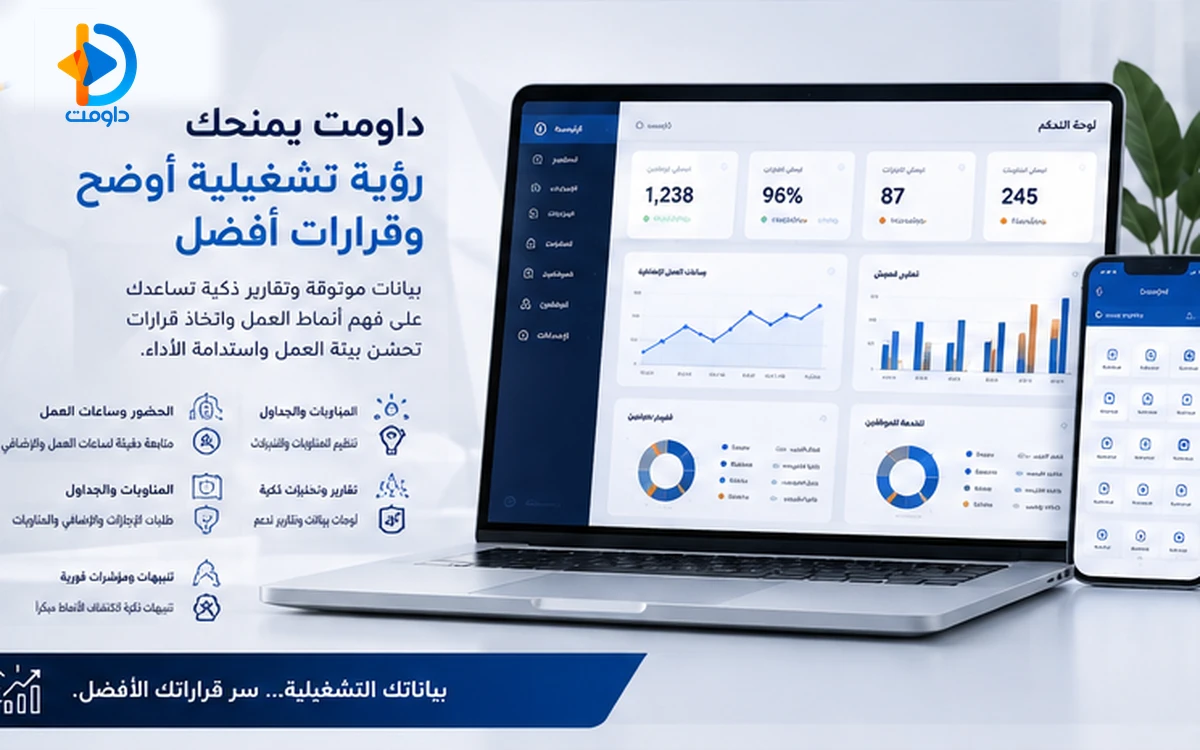
Dawmt helps organizations track actual working hours, attendance, lateness, breaks, and overtime through attendance data and related reports.
Leave requests, balances, and leave planning can be managed through the platform, giving HR teams clearer visibility into how leave is being used across teams.
Organizations can manage shifts and schedule changes and connect work schedules with actual working hours.
Workforce, attendance, and working-hours reports help management compare trends across teams, branches, and periods.
Employees can submit and follow up on several requests, including leave, overtime, and shift-related requests, through the system.
Imagine that one branch of a multi-branch company shows the following pattern over three months:
• Overtime continues to increase.
• Shift changes become more frequent.
• Leave utilization decreases.
These data do not prove that employees have a medical or psychological condition.
They do, however, justify important management questions:
Has the workload increased?
Is staffing sufficient?
Is the current schedule sustainable?
Is workload distributed fairly?
Does the manager or team need additional support?
Should priorities or resources be adjusted?
This is where HR data becomes useful: not as a diagnosis, but as a starting point for better management decisions.
Managing workplace stress is not the employee’s responsibility alone.
Organizations can reduce sources of chronic pressure by reviewing workload, staffing, schedules, managerial practices, communication, and available resources, and then measuring whether the changes they introduce actually improve working conditions.
When attendance, leave, shift, and working-hour data are organized clearly, HR teams are better positioned to identify patterns that deserve attention and start the right conversation at the right time.
• World Health Organization — Mental Health at Work.
• World Health Organization — Guidelines on Mental Health at Work.
• World Health Organization and International Labour Organization — Mental Health at Work: Policy Brief.
• International Labour Organization — Working Time and Work-Life Balance Around the World.
• Dawmt — Official product and feature pages.
This article is intended for general educational and managerial purposes. It does not constitute a medical or psychological diagnosis and does not replace professional advice where required.
Common factors include excessive workloads, time pressure, understaffing, long or inflexible working hours, unstable shifts, unclear roles, limited control over work, and weak managerial support.
Not necessarily. Temporary pressure can occur in any organization. It becomes more concerning when it is persistent or recurring and begins to affect working conditions, recovery, or team performance.
Managers can review workload, priorities, schedules, and available resources, improve communication, set realistic goals and deadlines, and involve employees in decisions that affect how work is organized.
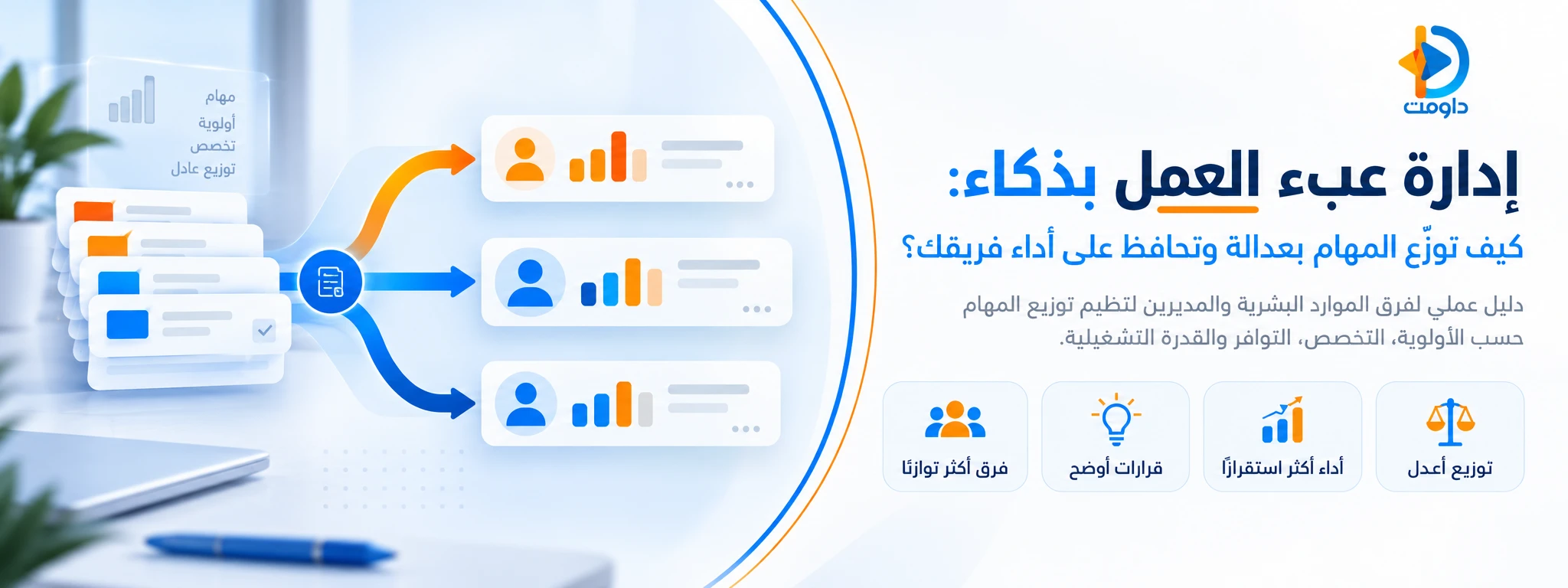
A practical guide to managing workload and allocating tasks based on priorities, skills, and actual availability, with operational signals that help HR teams identify imbalance and rebalance work more effectively.

A practical guide to employee burnout, its causes and warning signs, and how HR teams can identify workplace risk patterns early without turning employee data into a medical diagnosis.