
Employee burnout is not simply the result of one difficult day or a particularly busy week. The concern begins when workplace pressure becomes chronic and is not successfully managed.
For HR teams and managers, the goal should not be to diagnose employees. The practical objective is to understand working conditions, review operational trends, and start the right conversation before the problem becomes more serious.
The World Health Organization (WHO) includes burnout in ICD-11 as an occupational phenomenon rather than a medical condition.
WHO defines burnout as a syndrome resulting from chronic workplace stress that has not been successfully managed. The definition applies specifically to the occupational context.
• Feelings of energy depletion or exhaustion.
• Increased mental distance from one's job, or negative or cynical feelings related to work.
• Reduced professional efficacy.
WHO's definition connects burnout with chronic workplace stress that has not been successfully managed.
A busy week, a temporary project, or a single long working day therefore does not, by itself, demonstrate burnout.
From a management perspective, organizations should focus on recurring trends and working conditions and combine operational data with direct employee conversations rather than drawing conclusions from isolated incidents.

WHO guidance on mental health at work identifies psychosocial risks related to working conditions, including excessive workloads, time pressure, understaffing, long or unsocial working hours, shift work, limited control over work, poor workplace relationships, and unclear organizational roles.
• Persistently high workloads or an intense work pace.
• Repeated tight deadlines or insufficient staffing.
• Long hours, unstable shifts, or inflexible schedules.
• Unclear responsibilities or limited control over how work is performed.
• Weak managerial support or communication problems within the team.
• Difficulty maintaining healthy boundaries between work and personal life.
No single HR data point can prove that an employee is experiencing burnout.
However, HR teams can review operational patterns that may indicate increasing workplace pressure and that deserve further investigation.
• Repeated increases in overtime.
• Persistent late departures or work on rest days.
• Frequent shift changes.
• Noticeable changes in absence or lateness patterns.
• Accumulated leave that remains unused for long periods.
• Increased short absences following periods of intensive work.
• Sustained changes in the quality or speed of work.
• Reduced participation or initiative compared with the team's previous baseline.
These indicators should not be treated as a diagnosis. Their purpose is to help management identify changes that deserve discussion and review.

According to Gallup, employees who reported experiencing burnout at work very often or always were:
• 63% more likely to take a sick day.
• 2.6 times as likely to be actively seeking a different job.
• 13% less confident in their performance.
These findings do not mean that every organization will experience the same percentages, and they should not be interpreted as a fixed reduction in productivity.
They are research findings that demonstrate an association between burnout and several operational risks relevant to HR and management.
1. Establish a baseline for each team
Compare working hours, absence, leave, and shifts with the normal pattern of the same team rather than applying one number across the entire organization.
2. Analyze trends, not isolated incidents
Look for changes that persist over time and appear alongside more than one indicator.
3. Connect data with conversation
Use data to start conversations about workload, schedules, managerial support, and available resources.
Do not use HR data to assign medical or psychological diagnoses to employees.
4. Review working conditions
If pressure appears concentrated within one team, shift, branch, or function, begin by reviewing workload distribution, scheduling, staffing, and management practices.
1. Review workload and staffing
WHO recommends organizational interventions that address working conditions and psychosocial risks, including workload and scheduling.
2. Set realistic schedules and goals
Persistent time pressure and unrealistic deadlines can contribute to chronic workplace stress. Goals should therefore reflect the resources and time available.
3. Train managers to provide support
WHO guidance includes manager training to improve understanding of workplace stress, communication skills, and appropriate responses to employee distress.
4. Manage flexible work arrangements clearly
The International Labour Organization notes that flexible working arrangements can support work-life balance, but they should be managed carefully to prevent work from extending continuously beyond normal hours.
5. Encourage adequate rest and use of leave
Review whether schedules provide employees with sufficient time away from work instead of allowing overtime and unused leave to accumulate over long periods.
6. Involve employees in decisions affecting their work
WHO emphasizes meaningful worker participation when organizations design mental-health-related workplace interventions.
7. Measure the impact of changes
After adjusting workloads, staffing, or schedules, review trends in working hours, absence, leave utilization, shift stability, and employee feedback to determine whether working conditions have actually improved.
Dawmt does not diagnose employee burnout.
The platform organizes workforce and HR data that can help management understand working patterns more clearly and support better operational decisions.

Relevant Dawmt capabilities include:
Track actual working hours, breaks, overtime, and lateness, supported by reports and dashboards.
Manage leave requests, balances, and leave planning to provide HR teams with clearer visibility into leave patterns.
Create and manage shifts, shift changes, and work schedules while connecting them with actual working hours.
Use workforce, attendance, and working-hours reports to support management review and decision-making.
Allow employees to submit and track requests such as leave, overtime, and shift changes through the platform.
Automating requests and approval workflows can reduce repetitive HR administration, but automation itself should not be presented as a treatment for burnout.
Illustrative Example: Reading Data Without Jumping to Conclusions
Imagine a multi-branch company notices, over a three-month period, that one branch has experienced increased overtime, lower leave utilization, and more frequent shift changes.
These data do not prove that employees are experiencing burnout.
They do, however, justify important management questions:
Has workload increased?
Is staffing adequate?
Are current schedules sustainable?
Is there seasonal or operational pressure?
Does the manager or team require additional support?
The next step should be to discuss the situation with the team and understand the underlying cause before taking action.
The objective is to turn data into a better management question:
“What has changed in the working conditions?”
rather than:
“Which employee has burnout?”
Conclusion
Employee burnout is closely connected to working conditions and how workplace stress is managed.
Organizations can respond more effectively by monitoring trends, listening to employees, reviewing workloads, schedules, and resources, and intervening early when persistent patterns of pressure emerge.
HR data can make these reviews clearer, provided that it is used to support decision-making and constructive conversations rather than as a diagnostic tool.
Sources
• World Health Organization — Burn-out an occupational phenomenon.
• World Health Organization — Guidelines on mental health at work.
• WHO and International Labour Organization — Mental health at work: policy brief.
• Gallup — Employee Burnout, Part 1: The 5 Main Causes.
• International Labour Organization — Working Time and Work-Life Balance Around the World.
• Dawmt — Official product and feature pages.
This article is intended for general educational and managerial purposes. It is not a medical or psychological diagnosis and does not replace professional advice where needed.
No. The World Health Organization classifies burnout in ICD-11 as an occupational phenomenon rather than a medical condition. It is associated with chronic workplace stress that has not been successfully managed.
Not necessarily. Burnout cannot be determined from working hours alone. Organizations should review whether workplace pressure is persistent and consider workload, schedules, absence, leave, and other working conditions before drawing conclusions.
No. An HR system can organize operational data such as attendance, working hours, leave, overtime, and shifts. These data can support management review and conversations, but they are not medical or psychological diagnostic tools.
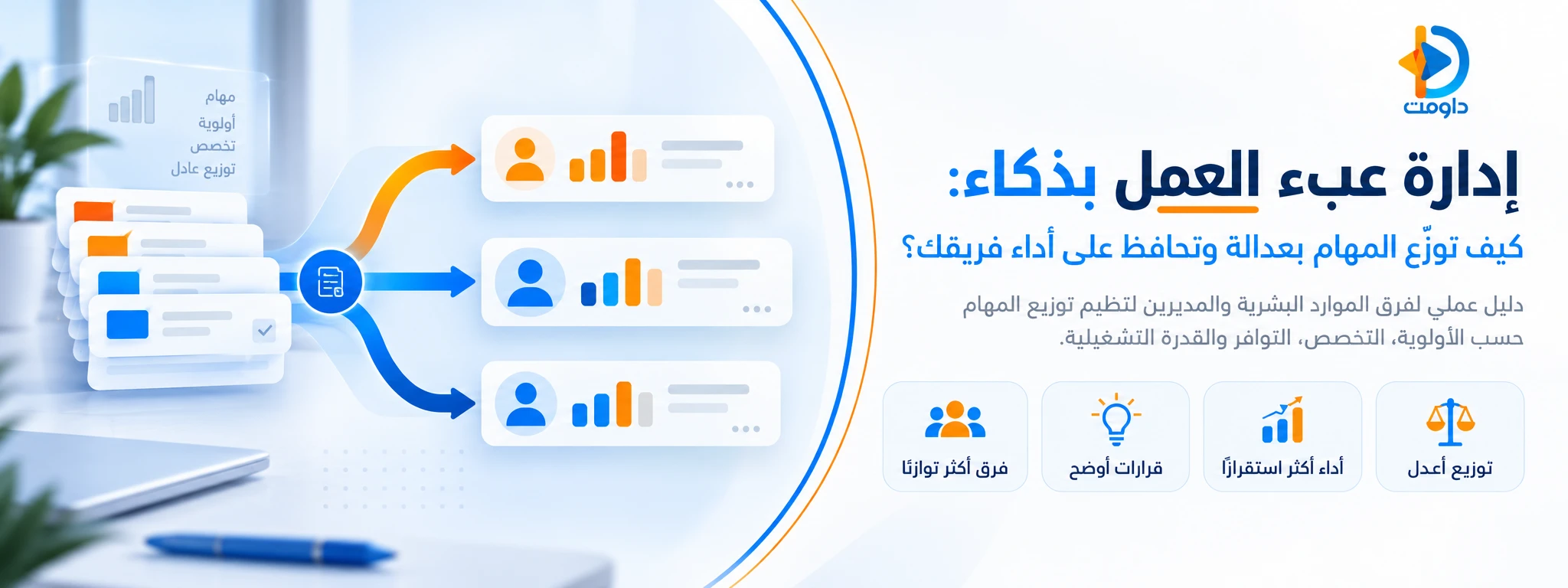
A practical guide to managing workload and allocating tasks based on priorities, skills, and actual availability, with operational signals that help HR teams identify imbalance and rebalance work more effectively.
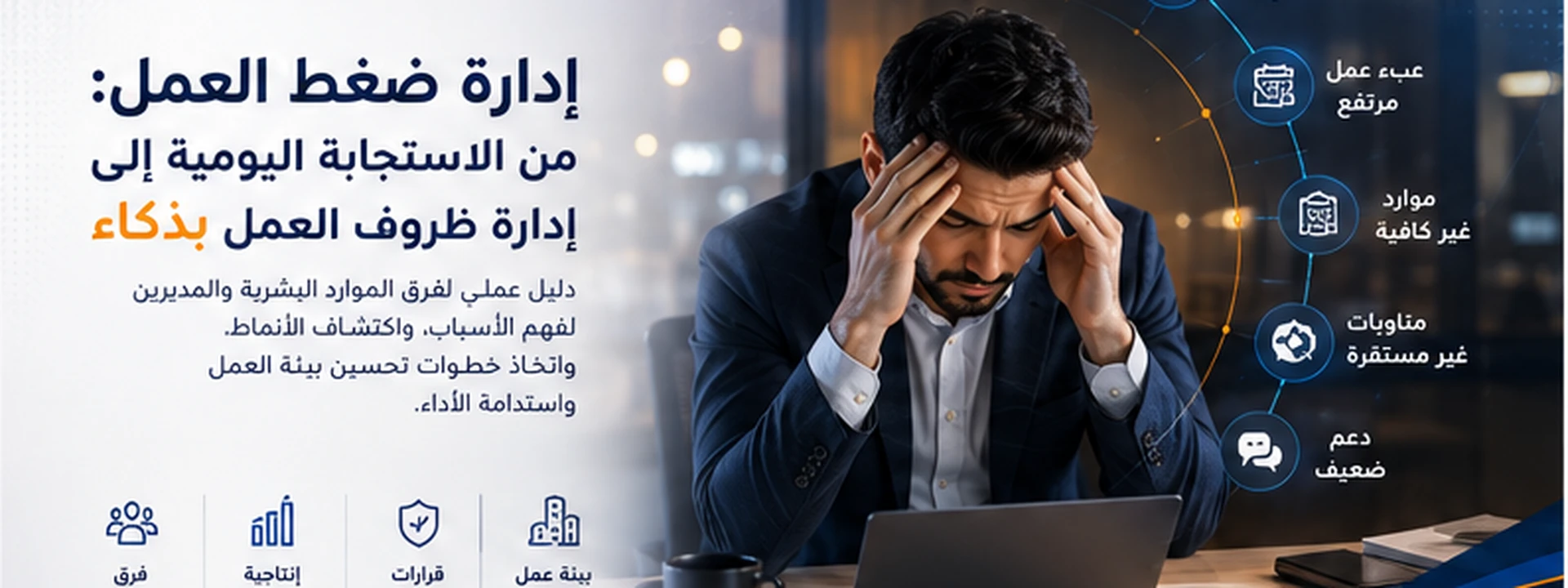
A practical guide to managing workplace stress, identifying chronic pressure factors, reviewing operational patterns, and applying evidence-based actions that help HR teams and managers improve working conditions.